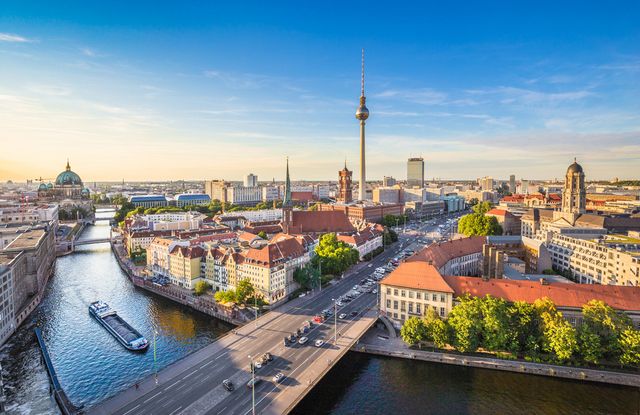
 Whether you’re a history buff, a lover of the arts, an urban-dweller, a nature-lover, or a person simply looking for a wonderful adventure, Berlin study abroad programs might be perfect for you. Why? Because Berlin’s multi-dimensional personality appeals to many types of people. Its history and culture are incredibly dynamic, and its modern-day expression provides a variety of opportunities to have an invigorating and profoundly impactful experience.
To learn more about Berlin study abroad programs and what it might look like to live and study in this vibrant city, read on.
Why Consider Study Abroad Programs in Berlin?
Quite simply, Berlin is a fascinating city that might provide a perfect setting for studying abroad. Like many places throughout the world, Berlin has a richly-textured past. What easily comes to mind, perhaps, is Berlin’s role in two world wars, the Berlin Wall, or the city’s history of battles, occupation zones, and revolution. However, Berlin has another history, one which includes the German Expressionist movement, a devotion to architecture (Gothic, Art Nouveau, and Modern, to name a few), and the roaring twenties. Overtime, Berlin’s residents have helped the city’s spirit of creativity, experimentation, and celebration flourish and shape Berlin's collective personality.
One particularly prevalent component of Berlin’s culture is that it seems to embrace opposites: the city is at once reserved and celebratory, historic and modern, traditional and innovative. It is quaint and expansive, charming and provocative. Berlin seems to celebrate these many dimensions and present an incredibly dynamic and invigorating environment for locals and visitors alike. Berlin might prove to be a wonderfully intriguing place to study abroad.
While you’re studying abroad in Berlin, you may find ample opportunities to explore the city’s unique character. Historical landmarks commemorate the city’s past, and boroughs and neighborhoods proudly boast remnants of years gone by. Numerous fairs and festivals celebrate Berlin’s many traditions, and the city’s public squares, parks, and extensive bike, pedestrian, and public transportation networks invite people to socialize, relax, and explore. As you traverse Berlin, you might pause at beer gardens, eat at trendy restaurants, scout the best currywurst stands, or sit in coffee shops to enjoy Berlin’s culture and social atmosphere. You might also enjoy Berlin’s nightlife, art scene, and network of museums. Best of all, you may be able to do all of this while earning academic credit, developing your German-language skills, and enhancing your resume with an international experience. Given these benefits, why not study abroad in Berlin?
What Should I See and Do While I Study Abroad in Berlin?
Thanks to Berlin’s beauty and intrigue, wandering through the city and enjoying your day-to-day life will likely be satisfying. However, there are some specific things that you might want to see and do while you’re studying abroad in Berlin.
- Visit Berlin’s parks, gardens, and forests. Whether you take a stroll in a pocket park or spend the afternoon exploring one of Berlin’s larger parks or gardens, you might want to devote some time to Berlin’s natural beauty. Many of Berlins’ parks boast dense populations of trees, flowers, and public works of art. Some great parks to visit include Botanischer Garten, Britzer Garten, Fridrichshain park, Grunewald Forest, and the (stunning!) parks and palaces of Potsdam, Germany (a nearby city).
- Utilize Berlin’s extensive pedestrian, bicycle, and public transportation networks. These networks can take you to most places throughout the city and many places beyond. Use them to find the remnants of the Berlin Wall, visit the DDR and Holocaust Museums, and see some of Berlin’s most treasured places (such as the Reichstag Building, the Brandenburg Gate, and the Berlin Cathedral).
- Partake in Berlin’s culture. Dance at night in public squares. Walk along a river to a beer garden (try one or more wonderful sausages while you’re there). Go to the symphony, philharmonic, or orchestra. See a play. Attend a festival. Shop at a farmer’s market. Eat a pretzel or some spaetzle. Eat currywurst from a food-cart. Jump into anything you can in Berlin and experience its culture and food firsthand.
- Read about Berlin’s history and visit its museums and historical landmarks. Berlin’s history makes its present and future all the more interesting. Take time to learn about the evolution of Berlin over time. Devote a couple of days to Museum Island and create a scavenger hunt of sorts to find historical clues and notes throughout the city.
What Can I Study in Berlin?
Berlin’s educational system is quite well developed, and study abroad opportunities exist across disciplines. Whether you want to study accounting, chemistry, ecology, film, sociology, urban planning, or another subject, Berlin study abroad programs likely have options for you. You can explore your options by term (including spring break, semester, academic year, and others) or specialty (or discipline) using our search tool. Alternatively, you can simply browse this page to get a broader sense of what types of programs are available.
Some programs might include opportunities to stay with host families, take structured excursions to places in and out of Berlin, study language, and more. With options such as these, you may find your perfect study abroad program in Berlin.
Find Berlin Study Abroad Programs
Your next step is to say “yes!” to finding your perfect study abroad program in Berlin. Explore your many options here. When you find programs you like, click on the links to get more information and to connect with programs directly. When you’ve found your favorite Berlin Study Abroad Programs, talk to an advisor at your school about your plans and ensure that your study abroad credits will transfer. Then, follow the advice of the program itself to register, pay, and prepare for your journey. After that, pack your bags and have a wonderful time! Your future self will likely thank you.